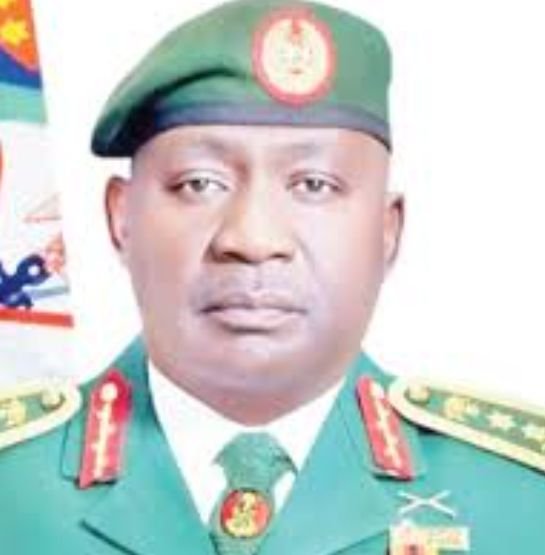
Brigadier General Muhammed Uba served as a senior officer in the Nigerian Army. He dedicated his life to protecting Nigeria from security threats, especially in the northeast region where terrorist groups operate. He held the rank of Brigadier General, which is a high position that involves commanding thousands of soldiers. He led the 25 Task Force Brigade in Damboa, Borno State, as part of Operation Hadin Kai. This operation fights against Boko Haram and Islamic State West Africa Province (ISWAP) terrorists.
His career lasted over thirty years. He started as a young officer and rose through hard work and bravery. On 15 November 2025, terrorists ambushed his convoy near Wajiroko village in Damboa Local Government Area of Borno State. ISWAP later claimed they captured and executed him. The Nigerian Army first said he was safe after the troops fought back. However, reports and video from the terrorists showed he was taken. This event saddened many Nigerians and highlighted the dangers soldiers face every day. This biography tells his story in simple terms to honor his service and help readers understand his contributions.
Early Life
Muhammed Uba was born on 1 July 1968 in Tudun Wada, Nassarawa Local Government Area of Kano State. Kano is a large commercial city in northern Nigeria with a rich history of trade and culture. He grew up in a community where family and discipline matter a lot. Many people from northern Nigeria join the military to serve their country, and Uba followed this path.
Not much public information exists about his childhood because military officers often keep personal details private for security reasons. He likely attended local schools in Kano and learned values like honesty, courage, and respect for elders. These values helped shape him into a responsible adult. Growing up in the north exposed him to Nigeria’s diverse cultures and the importance of national unity. From a young age, he showed interest in serving the nation, which led him to the military.
Education
Muhammed Uba received his military education at the Nigerian Defence Academy (NDA) in Kaduna. The NDA is the top institution that trains officers for the Nigerian Army, Navy, and Air Force. It is like a university but focuses on military skills, leadership, and academics. Uba joined through the Short Service Combatant Course 30 (SSCC 30). Short Service means officers serve for a set period but can extend if they perform well.
At the NDA, cadets wake up early for physical training, learn about weapons, tactics, study subjects like history, mathematics, and engineering, and build character through drills and teamwork. Uba completed his training successfully. On 13 March 1993, the army commissioned him as a Second Lieutenant. This marked the official start of his career as an officer. His education at NDA gave him strong foundation in both combat and strategy, preparing him for challenges ahead.
Career
Muhammed Uba began his career in the Directorate of Army Public Relations. In this role, he helped communicate army activities to the public and media. He worked on building trust between the military and civilians. This early job showed his skills in speaking and organization.
Later, he moved to infantry roles, which involve direct ground fighting. Infantry officers lead soldiers in battles and patrols. Uba served in various units and gained experience in different parts of Nigeria. He attended additional courses to improve his skills, as all officers do to qualify for promotions.
Over the years, he rose through the ranks:
- Second Lieutenant in 1993
- Lieutenant
- Captain
- Major
- Lieutenant Colonel
- Colonel
- Finally Brigadier General
Each promotion came with more responsibility. He held staff positions and commanded units. His last and most important role was Commander of 25 Task Force Brigade in Damboa, Borno State. This brigade operates in one of the toughest areas affected by insurgency. Uba led patrols, coordinated with air force support, and worked with local vigilantes called Civilian Joint Task Force (CJTF) to clear terrorists from villages. His leadership earned respect from his troops and superiors.
Achievements
Brigadier General Uba achieved much in his fight against terrorism. He led many successful operations that reduced terrorist activities in Borno State. Under his command, 25 Task Force Brigade conducted patrols deep into Sambisa Forest, a known hideout for insurgents. These patrols destroyed terrorist camps, rescued civilians, and recovered weapons.
One key success was securing communities around Damboa and making roads safer for travel. He emphasized working with local people to gather intelligence, which helped prevent attacks. His troops often dominated encounters with terrorists, forcing them to retreat. Uba also boosted troop morale by leading from the front, meaning he joined dangerous missions himself.
The army trusted him with brigade command because of his track record. He combined toughness in battle with good communication skills from his early public relations days. This helped in civil-military relations, where soldiers support communities with medical help or school repairs. His efforts contributed to the overall progress in Operation Hadin Kai, which has weakened Boko Haram and ISWAP in recent years. Many soldiers saw him as a role model for professionalism and dedication.
The Fateful Ambush
On 15 November 2025, Brigadier General Muhammed Uba led a routine patrol near Wajiroko village in Damboa Local Government Area, Borno State. The patrol aimed to secure areas around Sambisa Forest and check on communities. He commanded troops from 25 Task Force Brigade and members of the Civilian Joint Task Force.
As the convoy returned toward base, ISWAP terrorists launched a sudden attack. They used heavy firepower and possibly booby traps. The soldiers fought back courageously and forced the terrorists to withdraw at first. Two soldiers and two CJTF members died in the initial clash.
Reports later showed the terrorists intercepted military communications and planned the ambush carefully. General Uba became separated from the main group during the intense fighting. ISWAP captured him and some others. On 17 November 2025, ISWAP released a video claiming they executed him. The video showed him in captivity before his death. The Nigerian Army initially stated on 15 November that the commander was safe and no abduction occurred. However, multiple sources, including independent reports, confirmed his capture and execution. This incident showed the ongoing risks in the counter-insurgency operations and the sophistication of terrorist tactics.
Conclusion
Brigadier General Muhammed Uba gave his life in service to Nigeria. From his birth in Kano in 1968 to his commissioning in 1993 and his final mission in 2025, he showed commitment to duty. His work in counter-insurgency helped protect many innocent lives and brought hope to troubled regions. Though his death brings sadness, it reminds everyone of the sacrifices soldiers make daily.
His legacy lives on in the soldiers he trained and the communities he helped secure. Nigeria needs better equipment, intelligence and support for troops to end the insurgency completely. General Uba’s story inspires young people to serve with honor. May his soul rest in peace, and may his family find strength.
FAQs
Who was Brigadier General Muhammed Uba?
He was a senior Nigerian Army officer who commanded 25 Task Force Brigade in Operation Hadin Kai against terrorists in Borno State.
Where was Brigadier General Uba born?
He was born on 1 July 1968 in Tudun Wada, Nassarawa Local Government Area, Kano State.
What was his educational background?
He trained at the Nigerian Defence Academy as part of Short Service Combatant Course 30 and commissioned in 1993.
How long did he serve in the Nigerian Army?
He served for over 32 years, from 1993 until his death in 2025.
What rank did Brigadier General Uba hold?
He held the rank of Brigadier General, a one-star general responsible for commanding a brigade.
What was his last position?
He served as Commander of 25 Task Force Brigade in Damboa, Borno State.
How did Brigadier General Uba die?
ISWAP terrorists ambushed his convoy on 15 November 2025 near Wajiroko in Borno State. They captured and executed him, as shown in their released video.
Did the Nigerian Army confirm his
death?
The army first denied abduction on 15 November 2025, but later reports and terrorist video and reports confirmed the loss.
What operations did he lead?
He led counter-insurgency patrols in Sambisa Forest and secured roads and villages in Borno State.
Why is his death significant?
If confirmed, he becomes one of the highest-ranking officers killed by terrorists in recent years, highlighting the dangers in the fight against insurgency.