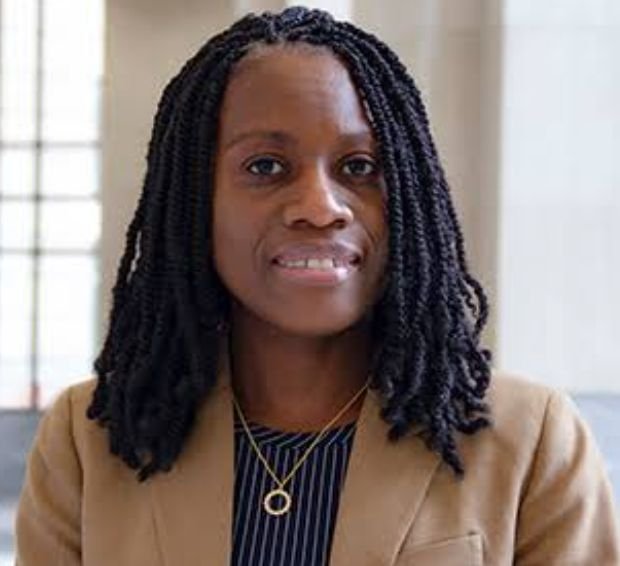
Oge Onubogu stands out as a key figure in US-Africa relations. She has spent almost twenty years working on governance and democracy issues in Africa. Her journey started in Nigeria and led her to top roles in major organizations. Today, she serves as Senior Fellow and Director of the Africa Program at the Center for Strategic and International Studies, known as CSIS. This position, which she took in August 2025, lets her guide research and policy on Africa’s role in world affairs. Her story shows how one person’s dedication can bridge continents and promote peace.
This biography covers her early life, education, career path, main contributions, personal insights, broader effects of her work, her time leading at the Wilson Center, and ends with key takeaways. It also includes answers to common questions about her.
Early Life
Oge Onubogu was born in Nigeria, a country rich in culture and facing many challenges after gaining independence. Her family roots there shaped her views on global issues. As a child, she likely heard stories about Nigeria’s push for freedom and growth in the post-colonial era. These tales sparked her interest in international relations and helping communities.
She moved to the United States as a first-generation immigrant. This change brought hurdles, like adjusting to a new culture while holding onto her Nigerian identity. Such experiences built her strength and empathy. They helped her understand the struggles of people in diaspora communities. Her early years taught her the value of bridging different worlds, a skill she uses in her work today.
Though details about her childhood home or exact birth date stay private, her Nigerian background remains clear in her focus on African governance. She often draws from her heritage to advocate for better policies. This foundation pushed her toward a career in helping nations build strong democracies. Her story inspires others from similar backgrounds to pursue global roles.
Education
Oge Onubogu built a strong academic base that prepared her for a career in international affairs. She earned her bachelor’s degree in International and Area Studies from the University of Oklahoma. This program gave her a broad view of world politics and cultures. It focused on understanding different regions, which matched her interest in Africa.
Next, she pursued a master’s degree in International Development at Brandeis University’s Heller School. Here, she learned about sustainable growth and helping communities thrive. The courses covered topics like policy making and economic strategies for developing countries. This knowledge became key in her later roles.
She also gained a credential in Public Leadership from the Harvard Kennedy School. This training sharpened her skills in leading teams and influencing policy. It included lessons on ethics, strategy, and working with diverse groups. These studies equipped her to handle complex issues in Africa and beyond.
Her education path shows a commitment to learning. She chose programs that blended theory with real-world application. This mix helped her become an expert in governance and democracy. Aspiring professionals can learn from her by seeking similar focused studies.
Career
Oge Onubogu’s career spans many organizations, each building on the last. She began at the International Rescue Committee, where she coordinated programs to resettle refugees. This role taught her about supporting vulnerable people and navigating international aid.
She then joined the National Endowment for Democracy as a Program Officer for Anglophone West Africa. There, she managed a large grants portfolio for civil society groups in Nigeria, Sierra Leone, Ghana, and Cameroon. Her work focused on strengthening democracy through funding local projects.
Next, at the National Democratic Institute, she served as a Program Manager. She handled citizen engagement, elections, and political party programs in Southern Africa countries like Malawi, Zambia, and Zimbabwe. She also supported women’s political participation and observed elections in places like Nigeria and Liberia.
She consulted for groups such as the World Bank, Freedom House, and the Carter Center. These short-term roles involved advising on governance and elections across Africa.
In 2015, she moved to the United States Institute of Peace as Senior Program Officer for Africa Programs. She later became Director of the West Africa Program. In this position, she led efforts in Nigeria and nearby areas to reduce conflict and promote inclusion.
From January 2023 to August 2025, she directed the Africa Program at the Wilson Center. She oversaw research on US-Africa ties and key challenges.
Since August 2025, she has led the Africa Program at CSIS as Senior Fellow and Director. Here, she shapes strategies on geopolitics and foreign policy in Africa.
Her career shows steady growth from hands-on aid to high-level policy. Each step added to her expertise in US-Africa engagement.
Key Contributions and Thought
Oge Onubogu has made lasting impacts on policy and thought in Africa. She has testified before the US House Foreign Affairs Committee multiple times. In February 2024, she spoke on the future of freedom in Nigeria. She highlighted the need for justice and better understanding of Nigeria’s complexities.
In March 2025, she addressed conflict and persecution in Nigeria. She warned against oversimplifying issues as religious persecution. Instead, she called for accountability and police reform.
At USIP, she expanded programs in Nigeria and West Africa to mitigate violence and build community security. Her work partnered with local leaders to promote peace.
She has authored reports and given speeches on democracy in West Africa. These include discussions on citizen support for governance despite challenges.
Her thought leadership pushes for mutual respect in US-Africa partnerships. She stresses engaging youth and states in Nigeria for stability.
Here are some of her pivotal works:
- Analysis on Nigeria’s elections and democratic resilience.
- Reports on coastal West Africa security.
- Policy briefs on governance reforms.
- Speeches at events like the US-Africa Business Summit.
- Contributions to indexes on African governance.
- Interviews on global media about African affairs.
- Collaborative pieces with experts on conflict resolution.
- Testimonies influencing US policy on Africa.
- Programs strengthening women’s roles in politics.
- Grants supporting civil society in multiple countries.
These efforts add value by providing practical tools for policymakers.
Personal Life
Oge Onubogu keeps much of her personal life private, focusing public attention on her professional work. She lives in Washington, DC, a hub for policy experts. This location helps her connect with global leaders.
Her Nigerian heritage plays a big role in her identity. As a Nigerian-American, she blends cultures in her daily life. This background fuels her passion for Africa’s growth.
She balances demanding roles with personal growth. For example, she has shared about attending events like space-related activities, showing interests beyond policy.
Challenges she faced include breaking barriers as a woman of color in foreign policy. She overcame them through hard work and mentorship.
Her legacy includes inspiring others in international development. She offers tips like building networks and staying resilient.
Broader Implications
Oge Onubogu’s work affects global geopolitics beyond her direct roles. She highlights Africa’s rising importance in world affairs. Her focus on US-Africa ties helps shape trade and security partnerships.
In areas like BRICS and Africa dynamics, her insights promote fair engagements. She addresses climate security and tech in diplomacy.
Her efforts support sustainable development goals in Africa. By advocating for inclusion, she aids stability in regions like West Africa.
Looking ahead, her predictions on post-2025 stability emphasize youth involvement and strong institutions.
Readers can track US-Africa summits using her analyses. Her influence strengthens transnational networks for better global progress.
Leadership at the Wilson Center
Oge Onubogu served as Director of the Africa Program at the Woodrow Wilson International Center for Scholars from January 2023 to August 2025. In this role, she led research on US-Africa relations and continental challenges.
She oversaw reports on democratic issues in West Africa, including coups and elections. Her team worked with partners like the African Union.
Key achievements include her 2024 testimony on Nigeria’s freedom. She also spoke on persecution in 2025.
Compared to past leaders, her approach brought fresh ideas on partnerships. Pros include deeper networks; cons might involve shifting focuses.
She built on the center’s mission by hosting events and publishing briefs. Her time there boosted the program’s impact on policy.
Conclusion
Oge Onubogu’s biography tells a story of growth from Nigerian roots to leading US-Africa policy expert. Her work in education, career steps, and contributions shows dedication to democracy and peace. Personal resilience and broader impacts make her a role model.
Follow her on LinkedIn or CSIS for updates. Subscribe to Africa policy newsletters to stay informed. Her ethos reminds us that addressing local challenges drives global change.
FAQs
Who is Oge Onubogu?
Oge Onubogu is a Nigerian-American expert in governance and democracy. With nearly two decades of experience, she focuses on Africa and US-Africa relations. She has worked with governments, civil society, and international groups. Currently, she leads the Africa Program at CSIS as Senior Fellow and Director. Her roles include directing programs at USIP and Wilson Center. She testifies on key issues like Nigeria’s security.
What is Oge Onubogu’s nationality and state of origin?
She is Nigerian-American, born in Nigeria. Her state of origin in Nigeria is not publicly detailed, but her work often ties back to Nigerian issues.
How did Oge Onubogu start her career in international relations?
She began at the International Rescue Committee, helping resettle refugees. Then, she moved to the National Endowment for Democracy, managing grants for West Africa. This led to roles at the National Democratic Institute and consultancies with groups like the World Bank.
What are Oge Onubogu’s major achievements at USIP and Wilson Center?
At USIP, she expanded programs in Nigeria and West Africa for conflict mitigation. At Wilson Center, she led research on democracy and testified on Nigeria’s freedom and security.
Why is Oge Onubogu testifying on Nigeria’s security issues?
She testifies to share expertise on complex conflicts. She urges balanced views, accountability, and reforms to address violence beyond simple narratives.